
Diagnostic algorithms now surpass some practitioners in the early detection of complex pathologies. An implanted sensor continuously transmits a patient’s vital data, without human intervention. Telemedicine platforms see their usage double each year, while surgical robots reduce the average length of hospitalization by half.
The European regulation on medical devices is evolving more slowly than innovation, creating a gap between technological availability and actual patient access. Global investment in healthtech exceeded $50 billion in 2023, confirming the acceleration of a rapidly changing sector.
Overview of major technological trends transforming the medical sector
Medicine has never experienced such excitement. The dynamism of MedTech and HealthTech is disrupting benchmarks, injecting a wave of unprecedented tools into hospitals and practices. At the intersection of biology and advanced technologies, this new generation of solutions is shaping an ecosystem where diagnostics are refined, medical devices are connected, and digital technology is becoming essential in all pathways.
Connected objects are being deployed in the routine of caregivers. Monitoring vital signs, automatic alerts, remote prevention: connected health is no longer an abstract concept. Now, a simple bracelet or a mobile app allows for health tracking, anticipating complications, and booking an appointment with a specialist in just a few seconds. Telemedicine, once marginal, has become ingrained in habits, making care accessible even where doctors are scarce.
The wave of innovations doesn’t stop there. Artificial intelligence, surgical robotics, big data, virtual reality: each of these pillars contributes to the edifice. AI analyzes medical images in search of anomalies invisible to the human eye, refines diagnostics, and personalizes treatments. Surgical robots perform actions with unmatched precision, reducing the need for invasive techniques. Advances in nanotechnology pave the way for targeted treatments and unprecedented imaging clarity. For those wishing to follow this revolution, the Geek Medical website offers regular insights into the innovations and challenges shaking up the sector.
To illustrate this dynamism, here are the major innovations redefining the face of health:
- Mobile health applications: prevention, appointment management, and personalized follow-up.
- Connected medical devices: remote monitoring, early detection, automated alerts.
- Virtual reality: training, surgical simulation, therapeutic support.
Public agencies, such as the Digital Health Agency or the ARS, are multiplying initiatives to integrate these tools into practices. Their support structures a rapidly accelerating sector and ensures that innovation does not remain confined to laboratories.
How artificial intelligence, robotics, and connected health are redefining the daily lives of professionals
Artificial intelligence is no longer a laboratory fantasy. It is infiltrating the reality of hospitals, assisting doctors in analyzing medical images, early disease detection, or prescription assistance. At Foch Hospital, the Optim project demonstrated that integrating AI into medical imaging boosts the speed of care, reduces errors, and allows for greater personalization of care.
Surgical robotics is taking a decisive step forward. The Da Vinci robot, for example, transforms surgical practice by offering safer, less invasive interventions and accelerated rehabilitation. Surgeons refine their techniques through state-of-the-art simulators, like those at the Foch simulation center, and anticipate delicate situations through digital modeling. Digital twins are becoming valuable allies, allowing for the preparation of each operation based on a virtual replica of the patient.
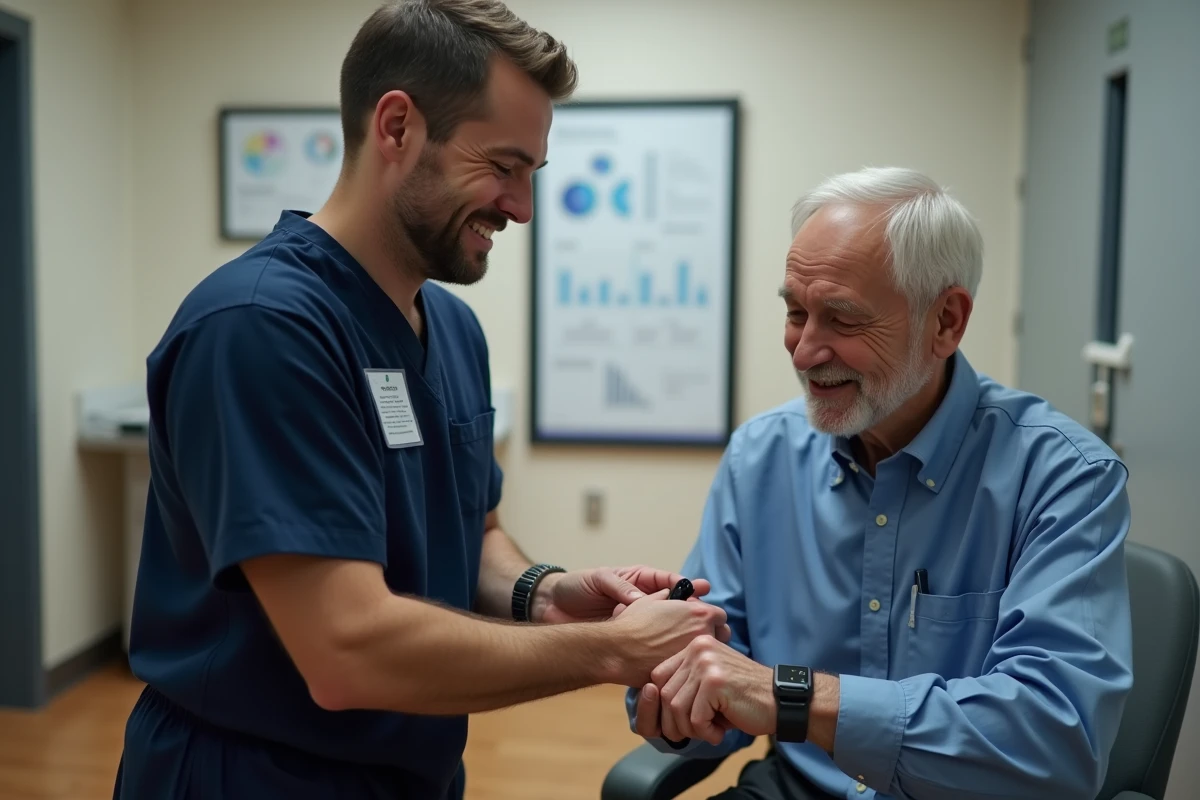
Connected health reshuffles the cards of the caregiver-patient relationship. Between mobile applications and smart devices, continuous monitoring becomes a reality. Professionals have real-time access to their patients’ data, such as blood pressure, heart rate, and automatic alerts, transforming the management of chronic diseases. Remote consultations, supported by telemedicine, are no longer the exception. Mutual insurance companies and institutions are adapting to this new reality, gradually integrating these services into their offerings.
However, this increased digitization raises the question of medical data protection. Under the watchful eye of the CNIL and the National Health Data System (SNDS), the confidentiality and security of digital records remain a constant concern for all stakeholders in the sector.
Towards more personalized medicine: what prospects for the coming years?
This is no longer a promise: precision medicine is unfolding, leveraging genome sequencing to tailor treatments to each individual. Standard protocols are giving way to targeted therapies, particularly in the fight against cancer or rare diseases. A notable example is Herceptin, a drug designed for a specific form of breast cancer, which heralds a new era of individualized care.
Regenerative medicine opens up unsuspected horizons. Thanks to 3D bioprinting, researchers are now creating living tissues and imagining alternatives to traditional grafting. Biomaterials serve as scaffolds for cellular regrowth, revolutionizing orthopedics or reconstructive surgery. Laboratories are even tackling the creation of organ prototypes, a prospect that could revolutionize the management of chronic diseases.
Digital twins are becoming essential in clinical trials. This virtual modeling allows practitioners to anticipate the effects of a drug or intervention, adjust therapeutic strategies, and minimize risks. The rise of big data and the widespread use of connected objects enrich the understanding of patient profiles, making each care pathway more tailored and responsive.
From gene therapy to connected devices to virtual reality for rehabilitation, technology is present at every step of the medical journey. Professionals are reinventing their roles, juggling innovations and scientific rigor, to provide patients with care that is ever safer and promising for the future. The face of health is changing rapidly, and the best is yet to come.