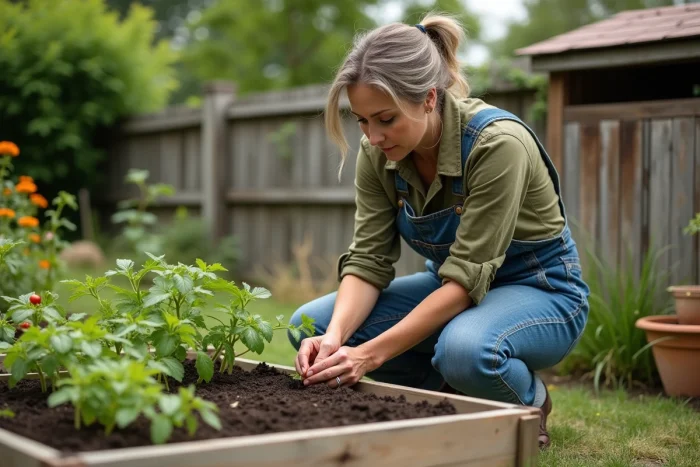
Creating a natural and productive vegetable garden at home starts with a fundamental question: what is the state of your soil before the first forkful of soil? Experiments conducted by INRAE and the DEPHY farm network show that the productivity of a natural vegetable garden relies less on planting density and more on the diversification of cultivated species.
This finding changes the approach to each step, from choosing the location to managing the harvests.
Soil analysis before the first sowing in the vegetable garden
Many amateur gardeners add compost or manure in large quantities from the first year, without knowing what their soil already contains. Agricultural chambers now recommend conducting a quick soil test (pH, organic matter, structure) before any amendment. Simplified kits are available for individuals and help guide the inputs.
An excess of organic matter in already rich soil can lead to nutrient leaching into the groundwater or induced deficiencies, particularly in iron or manganese. Test first, amend later: this sequence avoids correcting a problem that one has created oneself.
ADEME, in its guide “A Natural Garden” (2023 edition), details the pH and organic matter thresholds to aim for according to the vegetables grown. Additional resources are available on the Jardiner Naturellement website to delve deeper into the amendment methods suited to each type of soil.
Diversification of crops: what INRAE data shows
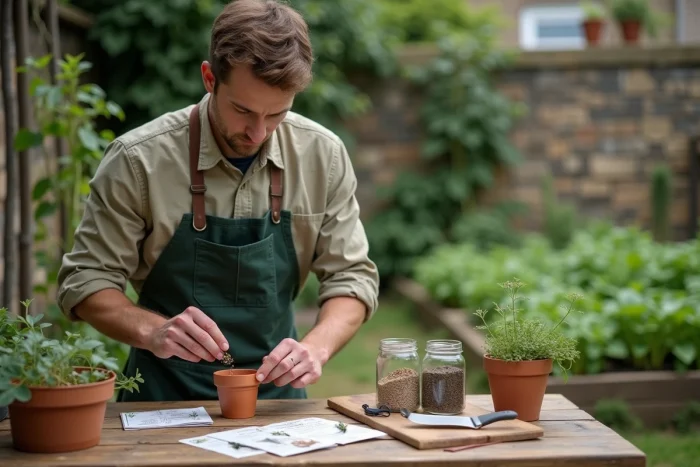
The common reflex is to fill every square meter with tomatoes, zucchinis, and salads. The DEPHY syntheses published in 2023 point in another direction: exceeding ten different species in a small area reduces pest attacks in a documented way.
This result can be explained by the disruption of biological cycles. A specialized aphid on legumes does not find a continuous corridor if alliums, solanaceae, and flowers are interspersed. Diversification acts as a natural physical and chemical barrier.
Which vegetable associations to favor
Vegetable-flower-green manure mixtures work better than classic rotations alone. Integrating phacelia or clover between rows of vegetables nourishes the soil with nitrogen while attracting pollinators and predatory pest auxiliaries.
- Combine tomatoes with basil or marigolds: the aromatic foliage confuses pest insects through olfactory disruption
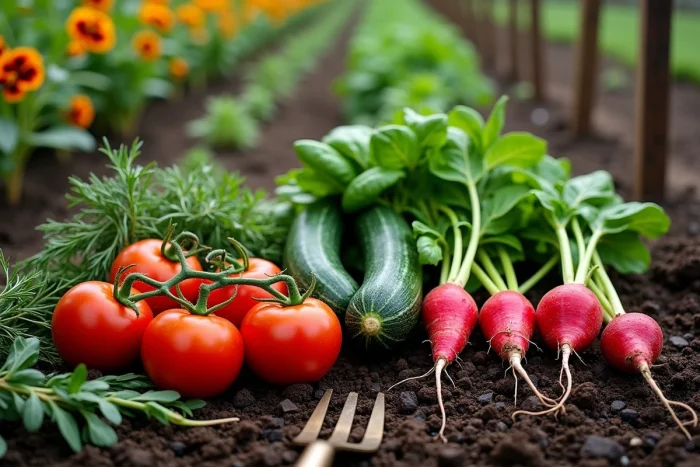
- Alternate root vegetables (carrots, radishes) and leafy vegetables (spinach, lettuces) to exploit different soil depths
- Sow a green manure (mustard, phacelia) as soon as a bed becomes available, even for a few weeks in spring or autumn
The goal is not to plant everything at once, but to maintain a varied plant cover for as long as possible during the season.
Permanent soil cover and no-till: the municipal trend
Since 2022, several French municipalities have encouraged individuals to adopt no-till and permanent cover zones in their home gardens. This approach aligns with the pesticide reduction objectives of the Ecophyto plan.
In practical terms, this means mulching permanently (shredded wood, straw, dead leaves) and limiting tilling to situations where the soil is genuinely compacted. Mulch retains moisture, regulates soil temperature, and nourishes earthworms and microorganisms.
Mulch and water: a direct link to productivity
A bare soil in the middle of summer loses its water through evaporation in just a few hours. Under a layer of mulch, the necessary watering decreases significantly and the roots remain in a zone of stable temperature. For summer vegetables (tomatoes, peppers, eggplants), this regulation makes the difference between a stressed plant and one that produces until the first frosts.
On the other hand, some vegetables like carrots or onions prefer a more aerated surface soil at the time of sowing. In this case, temporarily removing the mulch and then replacing it once the seedlings are well established remains the most effective method.
Space management and harvest calendar in the natural vegetable garden
A productive vegetable garden is not a huge garden. The key lies in managing time as much as space. Each bed should produce at least two crops per season: a spring crop followed by a summer crop, or a summer crop followed by an autumn green manure.
- Plan sowing by staggering dates to spread out the harvests (sowing salads every three weeks rather than all at once)
- Harvest early: a vegetable left too long in place monopolizes space and loses in taste quality
- Utilize verticality for climbing plants (beans, cucumbers, peas) to free up ground space for low crops
Staggering sowing produces more vegetables than expanding the cultivated area. A modestly sized, well-managed garden provides regular harvests from spring to autumn.
Shade and sunlight: adapting crops to the available space
Field data diverges on the minimum number of hours of direct sunlight required. Most fruiting vegetables (tomatoes, peppers) require generous sunlight. Leafy vegetables (spinach, arugula, lamb’s lettuce) tolerate partial shade well and allow for the utilization of less exposed areas of the garden.
Placing tall crops (corn, sunflowers, pole beans) to the north of the plot prevents them from casting shade on neighboring rows. This detail of arrangement has more impact on productivity than a choice of variety.
A productive natural vegetable garden is built on three pillars: understanding the soil before amending it, a plant diversity that goes beyond simple rotation, and a permanent cover that protects what you have spent months building. The first useful gesture remains to take a handful of soil and observe it, even before opening a packet of seeds.